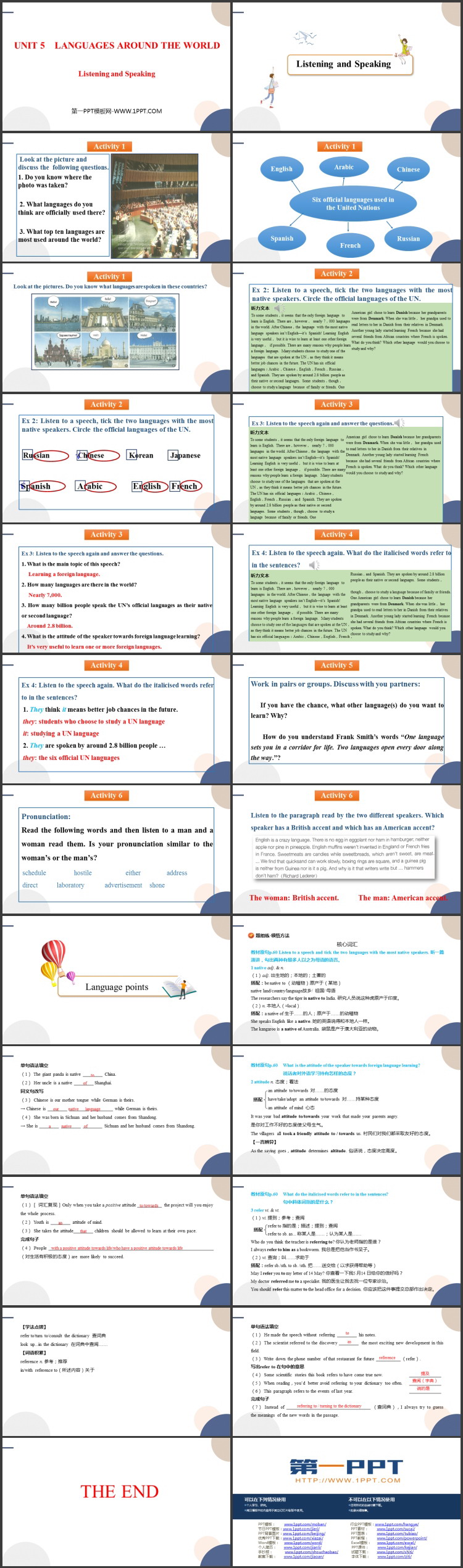
本课件围绕世界语言这一主题,通过图片讨论和听说训练,引导学生了解联合国官方语言、不同国家的母语使用情况,以及全球使用最广泛的语言种类。同时重点讲解native与attitude两个核心词汇的用法、搭配与例句辨析,帮助学生掌握相关语言知识,提升听说实际运用能力。
听力与口语练习
观察图片并讨论以下问题。
1. Do you know where the photo was taken?
2. What languages do you think are officially used there?
3. What top ten languages are most used around the world?
语言点讲解
native adj. & n.
1. adj. 出生地的;本地的;土著的
搭配:be native to(动植物)原产于(某地)
native land / country / language 故乡 / 祖国 / 母语
例句:The researchers say the tiger is native to India. 研究人员说这种虎原产于印度。
2. n. 本地人(=local)
搭配:a native of 生于……的人;原产于……的动植物
例句:She speaks English like a native. 她的英语说得和本地人一样。
例句:The kangaroo is a native of Australia. 袋鼠是产于澳大利亚的动物。
attitude n. 态度;看法
常见搭配:
an attitude to / towards 对……的态度
have / take / adopt an attitude to / towards 对……持某种态度
an attitude of mind 心态
例句:It was your bad attitude to / towards your work that made your parents angry. 是你对工作不好的态度使父母生气。
例句:The villagers all took a friendly attitude to / towards us. 村民们对我们都采取友好的态度。
一言辨异
As the saying goes, attitude determines altitude. 俗话说,态度决定高度。